
"tropical coffee regions"
4000 article(s) found

Learn about the planting of coffee trees
Coffee is now widely grown in the ribbon between the Tropic of Cancer. Coffee grown in different regions has different tastes. The unique soil, climatic conditions and planting methods of a country make the coffee produced in that country have a unique flavor. French winemakers call this phenomenon regional style. Geographically, there are three global coffee growing areas.
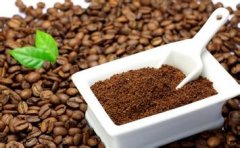
The taste of full-bodied Dominican fine coffee beans grind roasting degree processing method
The Dominican Republic is a favorite country for travelers. It borders Haiti on Hispaniola in the West Indies, Dominica to the west and Haiti to the east. The whitest, softest white beaches in the world, cool ocean breezes from the Atlantic and Caribbean and warm tropical sunshine make it a holiday paradise on par with the Maldives and Hawaii

Rich taste, lingering aftertaste, smooth and smooth coffee from Santo Domingo coffee producing region of Dominica
Turning to the introduction of Dominican coffee, the most distinctive features are fresh and elegant, full of particles, excellent acidity and pleasant flavor (two colleagues agree with this). Such flavor characteristics are not only related to the variety and the quality of the soil, but also closely related to the picking and handling of raw beans. Dominica's coffee is selected by the most expensive manual method, workers.

Dominica Santo Domingo Coffee Flavor description, Grinding characteristics, Price, planting Environment
The Dominican Republic is a popular country for travelers. It lives next to Haiti on the island of Hispaniola in the West Indies, Dominica in the west and Haiti in the east. The whitest and softest white sand in the world, the cool sea breeze from the Atlantic and Caribbean and the warm sunshine in the tropics make it a holiday paradise on a par with Maldives and Hawaii.

Coffee Origin-Coffee Classification of the main Coffee producing countries
Coffee Origin-Coffee trees in the main coffee producing countries are very similar to laurel and usually grow in the area between the Tropic of Cancer. A coffee tree usually grows for about three to four years before it begins to bear fruit. the fruit is a red berry and a small number of yellow berries. After drying and removing the pulp, the coffee beans can be separated. There are coffee beans all over the world.
History of coffee cultivation
In fact, the Arabs began to grow coffee in 525 BC, and chewing fried coffee beans became popular in the Arab region. In 890 AD, Arab merchants sold coffee beans to Yemen, and Yemenis made coffee beans into drinks for the first time. In the 15th century, coffee was introduced into Europe, Asia and soon into America. By the 18th century, tropical and subtropical regions around the world were widespread.

Introduction to the Cultural characteristics of the Flavor description method of Coffee Origin in Ethiopia
Coffee trees in Ethiopia can be roughly divided into five types, of which Arabica and Robusta are the more common. Arabica species, which account for more than 70% of the world's total output, are generally grown on slopes above 900 meters above sea level and are mostly found in tropical high-altitude areas such as Central and South America, East Africa, Southeast Asia and Hawaii. Its pleasant aroma and rich nourishment

A brief introduction to the market price of bright and sour Dominican boutique coffee beans
The earliest coffee in Dominica was introduced from Martinique (the overseas province of France), dating back to the early 18th century. Dominica is an island country with a tropical climate. The temperature changes little throughout the year. Except for the lower temperature in the Central Cordillera Mountains, which can reach less than 0 ℃ in winter, the annual average temperature in other areas is between 2530 ℃, which is affected by the mountain topography.
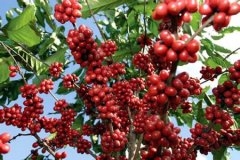
A brief introduction to the planting market price of Dominica boutique coffee beans with mellow taste
The earliest coffee in Dominica was introduced from Martinique (the overseas province of France), dating back to the early 18th century. Dominica is an island country with a tropical climate. The temperature changes little throughout the year. Except for the lower temperature in the Central Cordillera Mountains, which can reach less than 0 ℃ in winter, the annual average temperature in other areas is between 2530 ℃, which is affected by the mountain topography.

Dominica Santo Domingo Coffee Flavor description Grinding characteristics introduction to the taste of varieties in producing areas
The earliest coffee in Dominica was introduced from Martinique (the overseas province of France), dating back to the early 18th century. Dominica is an island country with a tropical climate. The temperature changes little throughout the year. Except for the lower temperature in the Central Cordillera Mountains, which can reach less than 0 ℃ in winter, the annual average temperature in other areas is between 25 and 30 ℃, which is affected by the mountain topography.

Delightful aroma Dominican fine coffee beans grinding degree roasting degree processing method brief introduction
Dominica's mild climate is conducive to coffee cultivation, and the best production areas for coffee are the Barahona region in the southwest and the Cibao Valley in the interior north of Santiago, Dominica's second largest city. The northern region, represented by Ciba, and the southern region, including Ocayabani Santo Domingo, produce fine coffee. Among them, Santo.
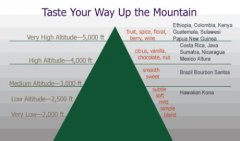
Effect of altitude on Coffee Flavor basic knowledge of Coffee
The influence of geographical location on the flavor of coffee beans is profound. All coffee grows in the tropics, and the altitude at which it grows has a profound effect on the taste of coffee. The tropical belt extends from 30 degrees north latitude to the equatorial regions of the southern mountains that produce the world's truly high-quality Arabica coffee. Central and South America, South Asia and some Pacific islands, south-central Africa is also the most important in the world.
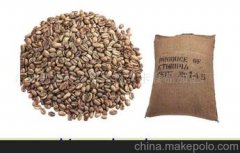
A brief introduction to the planting market price of Dominican boutique coffee beans with pleasant fragrance
The temperate climate in Dominica is conducive to coffee cultivation, and the best places to grow coffee are the Barahona region in the southwest and the Cibao Valley north of Santiago, Dominica's second largest city. The northern region, represented by Hibao, and the southern region, including Okayabani Santo Domingo, produce good coffee. Among them, Santo

A brief introduction to the origin, development, history and culture of Dominica boutique coffee beans with mellow taste
The earliest coffee in Dominica was introduced from Martinique (the overseas province of France), dating back to the early 18th century. Dominica is an island country with a tropical climate. The temperature changes little throughout the year. Except for the lower temperature in the Central Cordillera Mountains, which can reach less than 0 ℃ in winter, the annual average temperature in other areas is between 2530 ℃, which is affected by the mountain topography.

Where did the earliest coffee in Dominica come from?
The earliest coffee in Dominica was introduced from Martinique (the overseas province of France), dating back to the early 18th century. Dominica is an island country with a tropical climate. The temperature changes little throughout the year. Except for the lower temperature in the Central Cordillera Mountains, which can reach less than 0 ℃ in winter, the annual average temperature in other areas is between 25 and 30 ℃, which is affected by the mountain topography.

Dominica Santo Domingo Coffee with a lingering aftertaste
The earliest coffee in Dominica was introduced from Martinique (the overseas province of France), dating back to the early 18th century. Dominica is an island country with a tropical climate. The temperature changes little throughout the year. Except for the lower temperature in the Central Cordillera Mountains, which can reach less than 0 ℃ in winter, the annual average temperature in other areas is between 25 and 30 ℃, which is affected by the mountain topography.

A brief introduction to the origin, development, history and culture of Dominican boutique coffee beans with pleasant fragrance
The temperate climate in Dominica is conducive to coffee cultivation, and the best places to grow coffee are the Barahona region in the southwest and the Cibao Valley north of Santiago, Dominica's second largest city. The northern region, represented by Hibao, and the southern region, including Okayabani Santo Domingo, produce good coffee. Among them, Santo

A brief introduction to the treatment method of grinding degree and baking degree of Dominica boutique coffee beans with excellent acidity
The Dominican Republic is a popular country for travelers. It lives next to Haiti on the island of Hispaniola in the West Indies, Dominica in the west and Haiti in the east. The whitest and softest white sand in the world, the cool sea breeze from the Atlantic and Caribbean and the warm sunshine in the tropics make it a holiday paradise on a par with Maldives and Hawaii.

A brief introduction to the treatment method of grinding degree and baking degree of smooth and smooth Dominican boutique coffee beans
The Dominican Republic is a popular country for travelers. It lives next to Haiti on the island of Hispaniola in the West Indies, Dominica in the west and Haiti in the east. The whitest and softest white sand in the world, the cool sea breeze from the Atlantic and Caribbean and the warm sunshine in the tropics make it a holiday paradise on a par with Maldives and Hawaii.
Boutique Coffee the History of growing Coffee
In fact, the Arabs began to grow coffee in 525 BC, and chewing fried coffee beans became popular in the Arab region. In 890 AD, Arab merchants sold coffee beans to Yemen, and Yemenis made coffee beans into drinks for the first time. In the 15th century, coffee was introduced into Europe, Asia and soon into America. By the 18th century, tropical and subtropical regions around the world were widespread.